
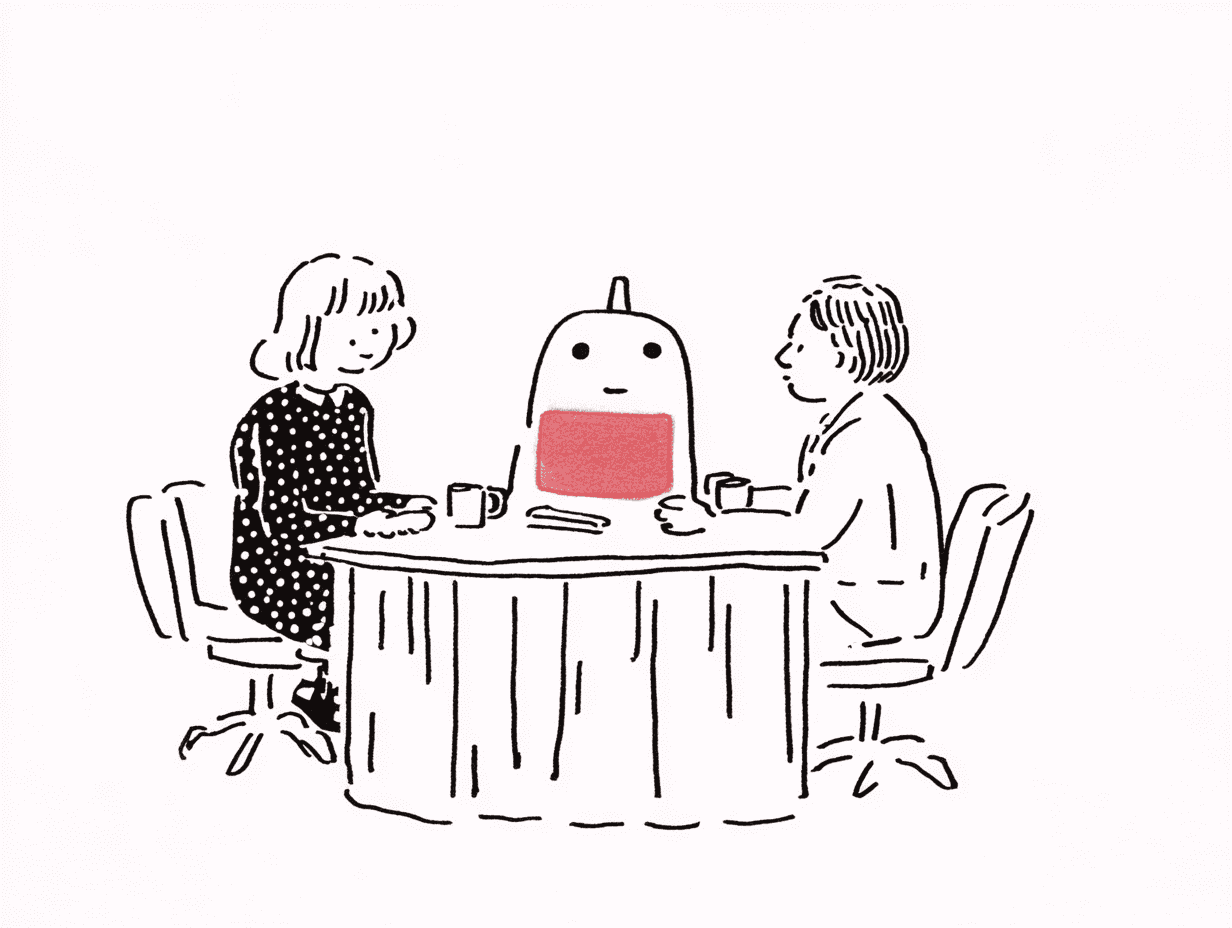
In the world of hiring, the secret to a successful interview is often described as "chemistry" — that invisible bond. But today, that bond is being formed not just between two humans, but between a candidate and an advanced AI agent. During interviews, candidates unconsciously adapt to the tone, pace, and word choices of the voice or text they're engaging with. Known as "Linguistic Style Matching," this phenomenon now plays a pivotal role in the success of digital interviews. So how does a candidate "speak the same language" as AI, and how does this affect hiring decisions? Scientific research shows that this linguistic mirroring directly elevates candidate success.
Linguistic mirroring: The hidden bond with AI
The interview process is essentially a reciprocal language game. A comprehensive study titled "Voice AI in Firms" conducted by Jabarian and Henkel (2026) uses a specialized index to measure the linguistic alignment candidates establish with AI interviewers. This index analyzes similarity across nine different functional word categories, including personal pronouns, auxiliary verbs, conjunctions, and quantifiers. The research data proves that the more linguistically aligned a candidate becomes with the interviewer, the more "comprehensive" and "high-quality" the interview turns out to be.
AI agents use a much more structured and rich language compared to human interviewers. Transcript analyses from Jabarian and Henkel's research reveal that AI agents' lexical richness score is 7.64, while human interviewers score only 6.66. This means that AI provides candidates with a more sophisticated and professional linguistic foundation. The candidate then adapts to this high-standard language, showcasing their own professionalism more effectively.
Why do we speak "smarter" with AI?
When interviewing with a human, physical appearance, body language, or the interviewer's facial expressions can trigger stress. But when talking to a bot, this "social pressure" disappears. Data shared by TestGorilla (2025) shows that candidates use fewer filler words (um, like, you know) in AI interviews and provide more focused answers. With reduced fear of social judgment, candidates dare to construct more complex sentences and use a richer vocabulary.
The "controlled variance" mechanism offered by AI comes into play here. Jabarian and Henkel (2026) emphasize that AI agents adjust their flow for each candidate while staying within a standardized framework. This structured consistency helps candidates better understand where the interview is heading and optimize their linguistic performance accordingly.
Accent and pronunciation: Barriers technology must overcome
Language alignment is not just about words — it also involves how sounds are produced. A study by Md Nazmus Sakib and colleagues (2018/2024) notes that non-native English speakers experience significant "accent masking" stress in AI interviews. Many candidates attempt to suppress their natural accent and imitate American or British pronunciation out of fear that the AI won't understand them.
However, next-generation systems are gradually eliminating this fear. In Sakib and team's (2018/2024) research, one participant noted that while older systems like Siri or Alexa struggled with accents, large language models (LLMs) like ChatGPT understood them perfectly even when speaking with their natural accent. This demonstrates how critical the underlying infrastructure of interview tools really is. Advanced technologies like OpenAI's Whisper API minimize error rates when converting speech to text, allowing candidates to preserve their linguistic authenticity (Sakib et al., 2018/2024).
Linguistic touches that improve candidate experience
It's not enough for an interview tool to simply "listen" — the candidate needs to feel understood. Sakib and colleagues (2018/2024) prove that giving candidates the ability to edit their responses via the transcript significantly reduces linguistic anxiety. When candidates can correct a misunderstood word, their trust in the system increases.
Additionally, AI's "motivational feedback" strengthens language alignment. Sakib and team (2018/2024) note that when AI uses affirming phrases during the interview such as "Thank you, that was a very clear explanation," it encourages candidates to provide more detail. Such interactive designs transform the interview from a "cold interrogation" into a "fluid dialogue." Research conducted by B.C. Lee and B.Y. Kim (2021) reports that overall satisfaction rates reached as high as 85% in organizations using such user-friendly AI interview systems.
Conclusion: The language of future interviews
Language alignment is becoming the new benchmark for interview success. AI helps candidates perform at their best by offering a richer linguistic environment and a low-pressure setting. However, it appears essential that this technological advantage be complemented by human empathy and relationship-building ability.
References
Chopra, F., & Haaland, I. (2024). Conducting Qualitative Interviews with AI. CESifo Working Papers, No. 10666.
Gartner. (2026). Gartner Survey Shows Just 26% of Job Applicants Trust AI Will Fairly Evaluate Them.
Jabarian, B., & Henkel, L. (2026). Voice AI in Firms: A Natural Field Experiment on Automated Job Interviews. Booth School of Business, University of Chicago.
Jurado, N. (2025). The effects of artificial intelligence on shaping employer brand perception: insights from entry-level hiring practices. Master Thesis, Universidad Carlos III de Madrid.
Lee, B. C., & Kim, B. Y. (2021). Development of an AI-based interview system for remote hiring. International Journal of Advanced Research in Engineering and Technology (IJARET), 12(3), 654-663.
Poenaru, L. F., & Diaconescu, V. (2025). Bridging Technology and Talent: Gen Z's Take on AI in Recruiting and Hiring. Bucharest University of Economic Studies.
Sakib, M. N., Rayasam, N. M., & Dey, S. (2018/2024). Experience and Adaptation in AI-mediated Hiring Systems: A Combined Analysis of Online Discourse and Interface Design. University of Maryland.
TestGorilla. (2025). Why 78% of candidates choose AI job interviews (and what it means for hiring). TestGorilla Insights.